
Sharing Te Whare Kaiao with an International Audience
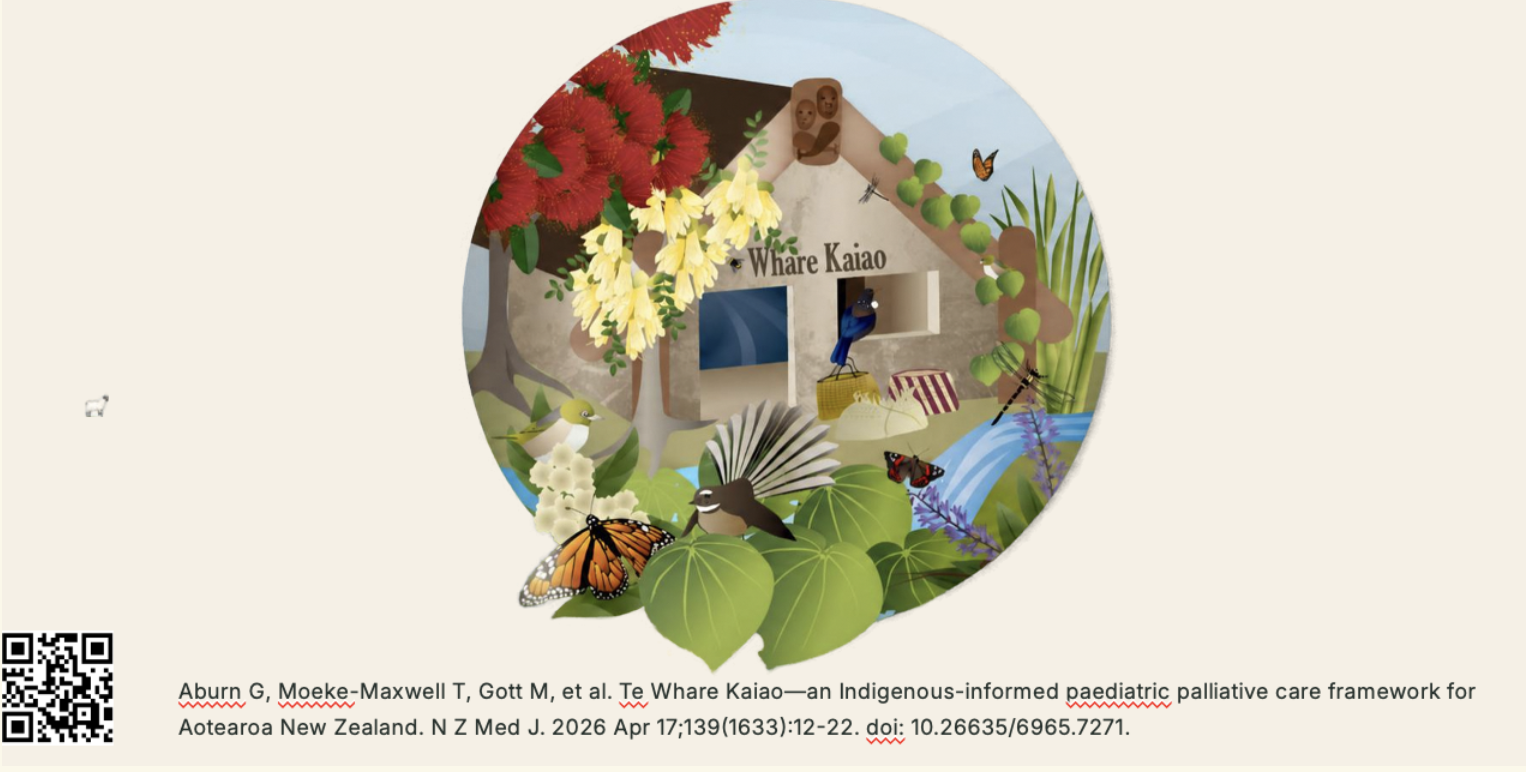
Te Whare Kaiao - breathing life into the house. Beautiful graphics by Sasha Maya.
This week at the Montreal International Palliative Care Congress, I had the privilege of presenting on behalf of Dr Gemma Aburn and our wider Te Ārai Children's Palliative Care Research Group, sharing the story of Te Whare Kaiao with an international audience.
Te Whare Kaiao is an Indigenous-informed framework for children's palliative care in Aotearoa New Zealand. Developed through partnership between Māori kaumātua, whānau with lived experience, clinicians and researchers, it reflects a shared commitment to ensuring that children's palliative care honours what matters most to children and their families.
The presentation highlighted how the framework emerged not from professional assumptions, but from Indigenous knowledge, community leadership and lived experience. Through a wānanga held in a wharenui and ongoing partnership with our Te Ārai Kāhui, participants described the importance of care that is grounded in aroha, compassion, relationships and respect for multiple ways of knowing.
A key message of the presentation was that children sit at the centre of wellbeing. Whānau are experts in their child, and high-quality palliative care is strengthened when clinical expertise is brought together with family knowledge, cultural wisdom and community support.
We also explored the role of Te Tiriti o Waitangi in shaping healthcare in Aotearoa and how Māori values, knowledge and worldviews can inform children's palliative care in ways that benefit all children and families, not only Māori.
One of the most powerful elements of Te Whare Kaiao is that it is a living framework. Rather than providing a checklist of tasks, it encourages clinicians to ask a simple but profound question: What is important to this child and whānau? From that starting point, care can be shaped around the child's cultural, spiritual, emotional and relational needs as well as their physical care.
The framework is already beginning to influence education and practice in Aotearoa. It has been integrated into the University of Auckland Children's Palliative Care Short Course and is helping inform future service development, including the establishment of a new national children's palliative care service. Future work will focus on developing resources for whānau and continuing research to strengthen children's palliative care across Aotearoa.
Presenting this work in Montréal was a reminder that while healthcare systems differ around the world, many of the challenges and aspirations are shared. There was strong interest in the ways Indigenous knowledge can contribute to more compassionate, culturally responsive models of care, and in the importance of genuine partnership with communities in developing services and frameworks.
Ngā mihi to Gemma, Tess, our Te Ārai Kāhui, the Arama-Raea whānau, all research participants, and the many people whose wisdom and generosity helped bring Te Whare Kaiao to life. Most importantly, we acknowledge the children and whānau whose experiences continue to teach us what truly matters in care.