
Nyá:wen & Merci Montréal

Montréal sits on the traditional and unceded territory of the Kanien’kéha people and many other Indigenous peoples call this beautiful land home.
Today I had the privilege of delivering a plenary at the 50th Montréal International Palliative Care Congress. Marking a milestone such as this invites not only celebration, but also reflection on what we want the next fifty years of palliative care to look like.
Palliative care was built on listening. Pioneers such as Cicely Saunders, Elisabeth Kübler-Ross and Balfour Mount transformed care by paying attention to the experiences of people living with serious illness. Their message was simple: listen and learn.
Yet when we look at the evidence that has shaped modern palliative care, a particular story dominates. In my presentation I introduced "Bob", a composite character representing the people most visible in our research: typically from the Global North, living with cancer, male, relatively well resourced, and well connected to healthcare services.
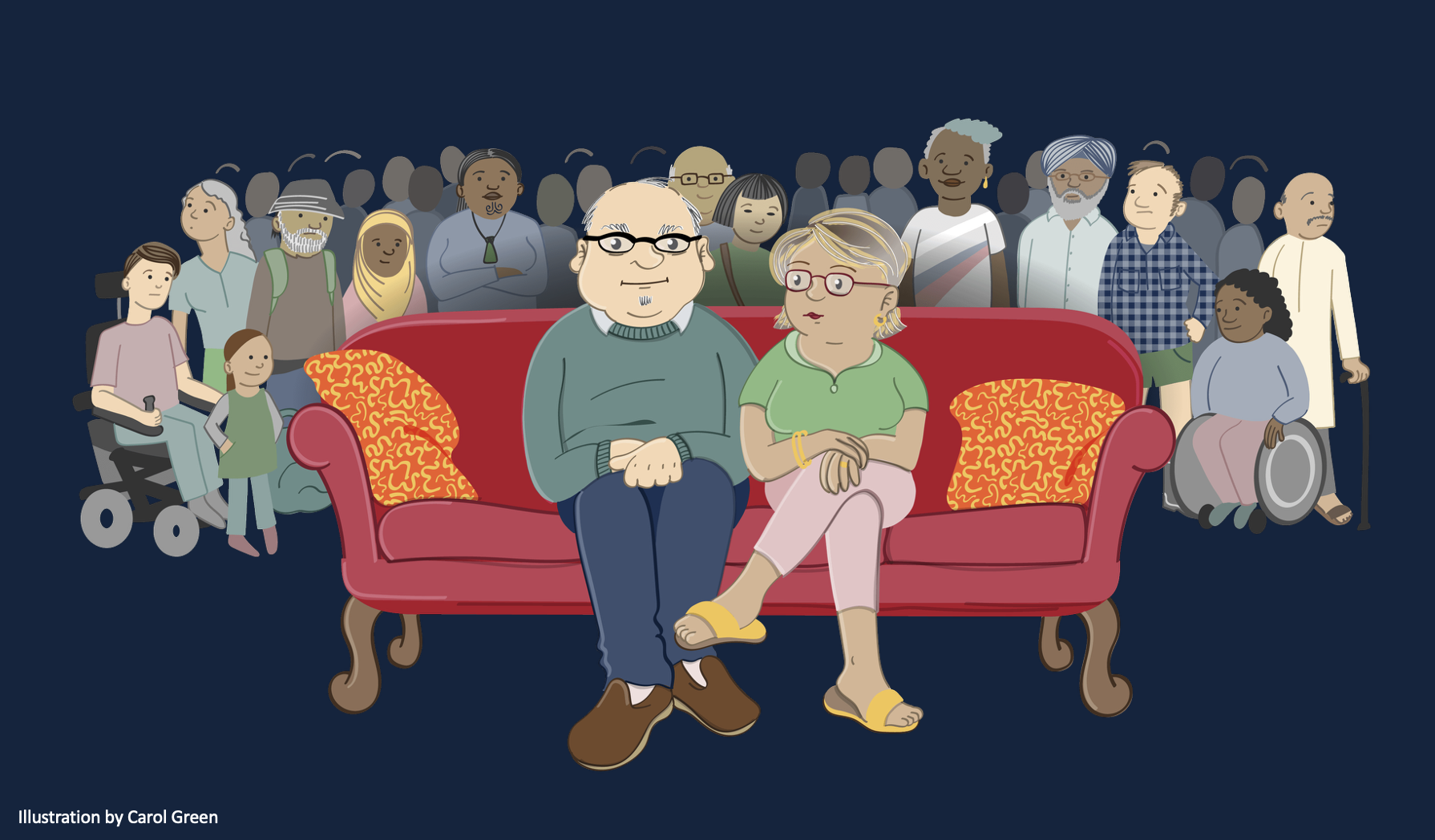
‘Bob’, the character around whom modern palliative has developed, surrounded by those from whom we have yet to learn.
The challenge is not that Bob's story matters too much. It is that many other stories remain invisible. Indigenous peoples, people experiencing homelessness, incarcerated people, refugees, people with disabilities, Rainbow communities and many others are often absent from, or unrecognisable within, the evidence that shapes policy and practice.
Drawing on the work we do in Te Ārai, I shared examples of the wisdom, resilience and expertise found in communities that are too often overlooked. These stories remind us that people beyond the spotlight are not only those we have failed to see. They are also those from whom we have failed to learn.
As palliative care enters its next 50 years, I believe our challenge is clear: to broaden whose experiences inform our evidence and whose voices help define our future. Equity is not simply about representation. It is about creating a field that learns from the full diversity of human experience.

By understanding who has been missing from our stories, we can build a more equitable future for palliative care.