
Better support needed for Māori whānau during out-of-hospital deaths
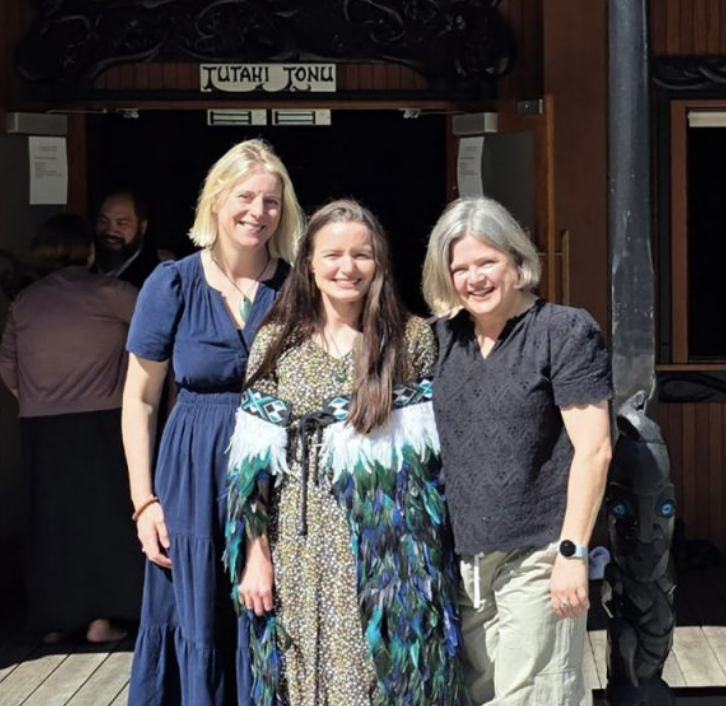
Eillish successfully defended her PhD last week at Tauira Marae
A new publication led by Eillish Satchell highlights important opportunities for emergency services to better support Māori whānau when death occurs outside hospital settings.
Each year, ambulance services attend more than 6,000 out‑of‑hospital deaths across Aotearoa. For Māori whānau, these moments are not only medical emergencies but deeply spiritual transitions that require time, collective presence and recognition of tikanga. Yet current emergency responses do not always align with these needs.
In this kaupapa Māori study Eillish (Ngāpuhi) worked alongside her supervisors Dr Natalie Anderson, Professor Merryn Gott and Dr Tess Moeke-Maxwell as part of her doctoral research. The team explored the experiences of 23 bereaved Māori whānau who were present when emergency ambulance services responded to a death at home or in the community. Whānau consistently described clinical care as competent, but cultural care as uneven. Many felt they were left to uphold tikanga alone at a time of profound shock and grief. Four key themes shaped whānau experiences: the importance of whānau kotahitanga and collective decision‑making; the central role of tikanga during death and bereavement; death as a spiritual transition rather than an endpoint; and the positive difference made when Māori emergency responders were present.
Whānau spoke of the need to stay together, care for their tūpāpaku, perform karakia and ensure dignity at the moment of death. These practices were sometimes constrained by emergency protocols that prioritise speed and procedures over presence and cultural needs, intensifying distress and disrupting the grieving process.
The study found that encounters felt safer and more supportive when Māori paramedics, police, fire personnel or funeral directors were involved. However, relying on Māori staff to carry responsibility for cultural safety places an unfair burden on individuals rather than addressing system‑wide issues.
The findings point to clear opportunities for change: strengthening cultural safety education, embedding Indigenous frameworks of care into emergency response, and increasing Māori representation across the workforce. Culturally safe care should not be an exception—it must be a shared responsibility.