
Representing Aotearoa in Rome
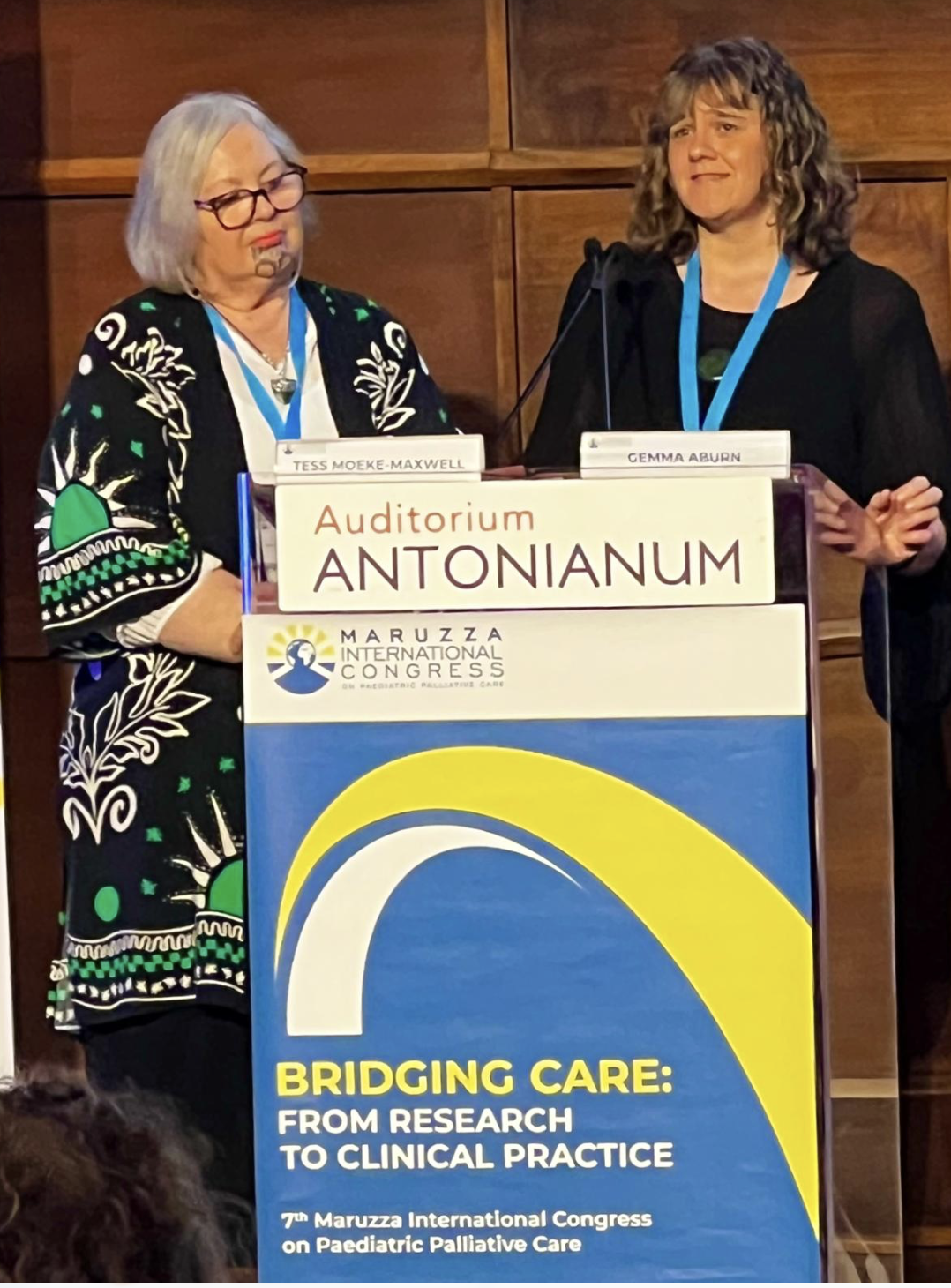
Tess and Gemma presenting Te Whare Kaiao
Dr Gemma Aburn and Dr Tess Moeke-Maxwell recently represented Te Ārai at the 7th Maruzza International Congress on Paediatric Palliative Care in Rome, sharing emerging resources from Te Whare Kaiao with an international audience of clinicians, researchers, educators and policy leaders.
The congress provided an opportunity to showcase kaupapa Māori approaches to paediatric palliative care and engage with colleagues from around the world who are working to improve outcomes for children and whānau living with serious illness.
The response to the presentations was overwhelmingly positive, with many delegates expressing interest in the work and taking time to discuss how the Te Whare Kaiao model and resources might inform developments within their own countries and healthcare systems.
The presentations focused on the development of two new whānau resources arising from Te Whare Kaiao.
Te Whare Kaiao - Tūī has been developed to support families to understand what paediatric palliative care is and how it can help children and whānau navigate life with serious illness. The resource provides practical guidance about accessing support, advocating for their child, understanding available services, and ensuring their voices are heard throughout their healthcare journey.
Te Whare Kaiao - Huia focuses on end-of-life care practices within Te Ao Māori. The resource explores important customs, tikanga and rituals that support children and whānau as they prepare for death, helping ensure a culturally safe transition through the ārai, or veil, to the heavenly realms. Together, these resources aim to strengthen whānau understanding, confidence and wellbeing during some of life's most challenging moments.
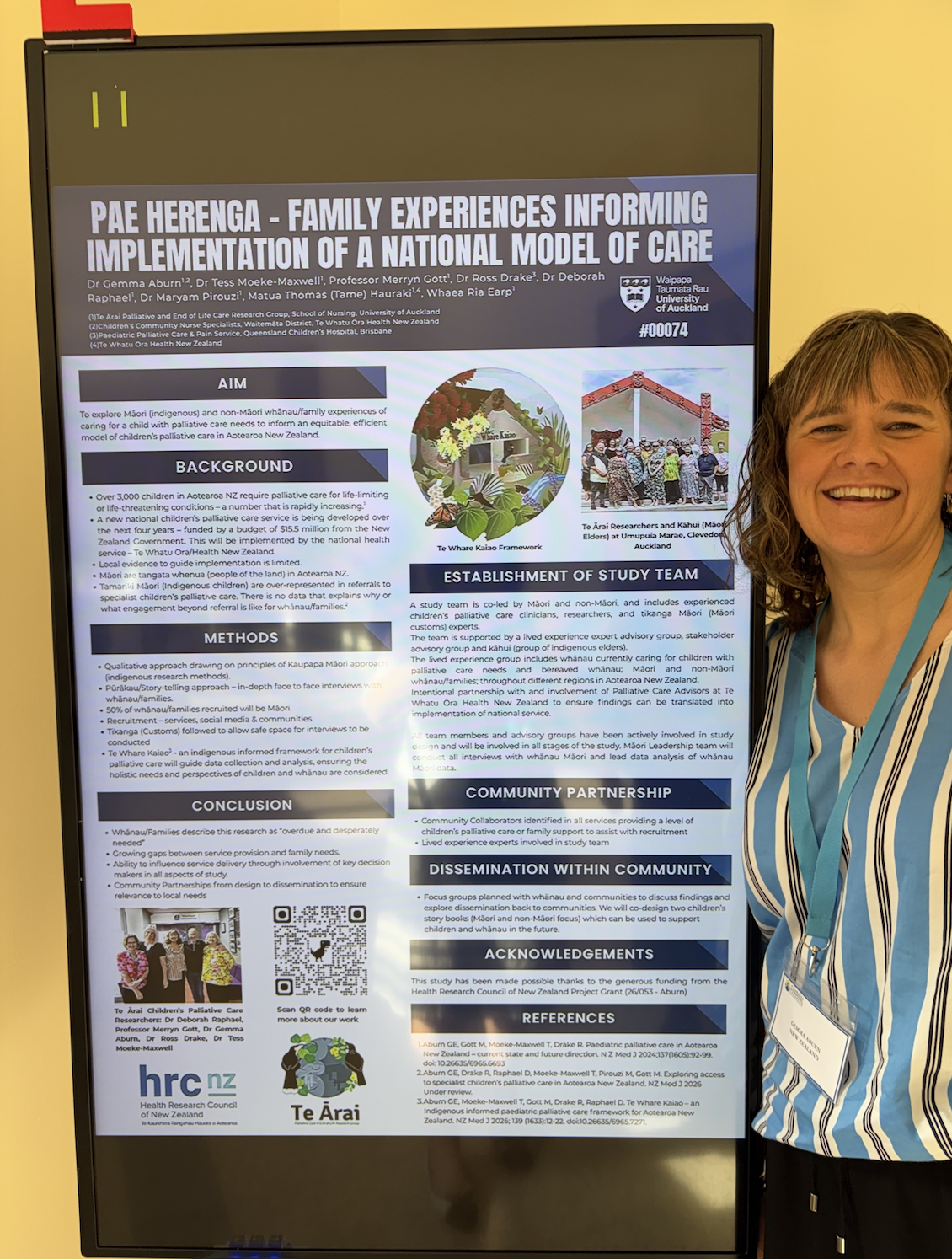
Gemma and Tess also presented a poster about our new Pae Herenga project
The congress also offered valuable opportunities to learn from international colleagues. One particularly notable presentation from a United States research team examined barriers to palliative care referral within paediatric cardiac intensive care settings. The findings closely mirrored those identified in Te Ārai's recent HRC activation grant study, highlighting that many of the challenges faced in Aotearoa are shared internationally.
Following the congress, Gemma will contribute to four days of teaching within the EPEC-Pediatrics programme. This year's programme brings together 55 participants from 21 countries, creating a rich environment for cross-cultural learning and discussion about how paediatric palliative care education can be adapted to meet the needs of diverse communities around the world.
The week has reinforced both the global relevance of Te Whare Kaiao and the growing appetite for culturally grounded approaches to paediatric palliative care. The connections, conversations and ideas generated in Rome will help inform future Te Ārai projects and strengthen international collaborations aimed at improving care for children and whānau worldwide