
Māori Experiences of Assisted Dying: What We’re Learning
Assisted dying is still new in Aotearoa, and for many Māori whānau the process can feel unfamiliar and emotionally complex. Dr Tess Moeke‑Maxwell and Associate Professor Jackie Robinson presented new insights into whānau experiences at the recent “Imagining the Ideal Assisted Dying Service in Aotearoa Conference” hosted by Victoria University, Wellington.
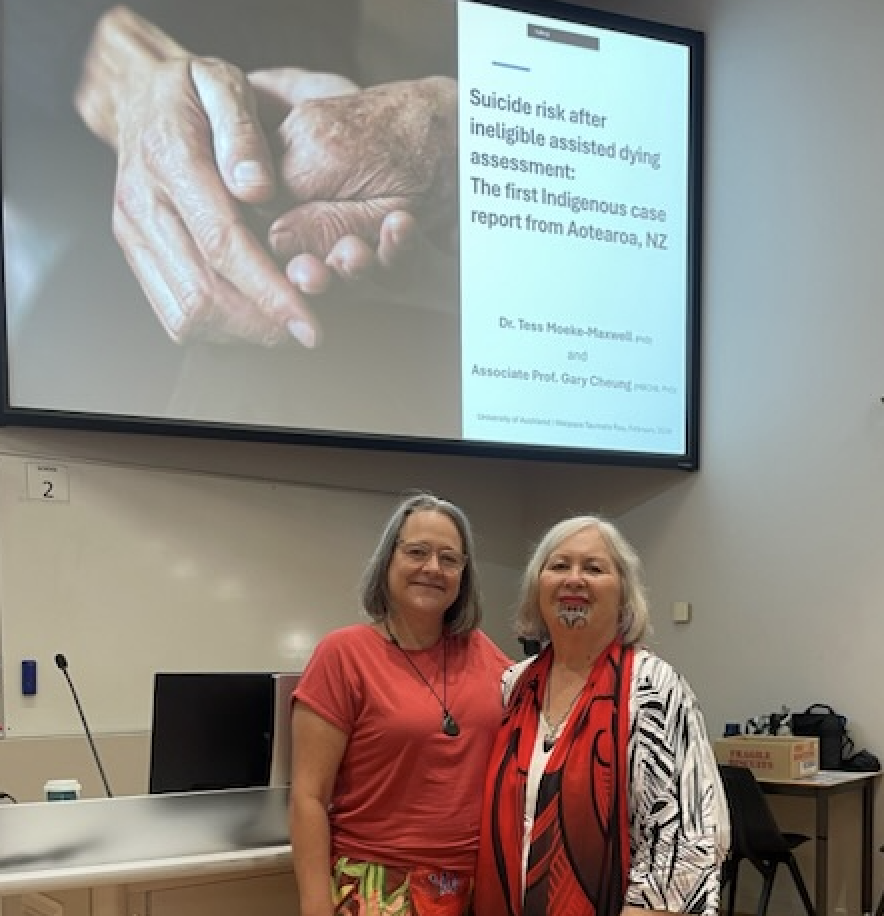
Jackie Robinson and Tess Moeke-Maxwell presenting findings from the Warea study
The Waerea Study, which is funded by the Health Research Council and led by Tess, uses Kaupapa Māori Research methods to understand the experiences of Māori considering Assisted Dying and the whānau who support them. Interviews were completed across the motu/country with whānau, clinicians, rongoā practitioners, spiritual leaders, tohunga and funeral directors.
Tess shared whānau views about Assisted Dying. Key insights included:
The importance of supporting the mana motuhake of the person choosing Assisted Dying, even when whānau felt uncertain.
Assisted Dying felt new, strange and surreal, leaving whānau unsure how to navigate the process.
Whānau play an important role whānau play as carers and guardians, with privacy protection a major concern.
Many felt proud of their loved one’s decision, but guilt and complicated grief were common.
The team is now developing culturally grounded resources—an app, website, and educational tools—to help whānau prepare, plan, and talk openly about assisted dying.
Jackie discussed what patients and whānau believe makes for high‑quality, compassionate assisted dying care. She highlighted that current training for Assisted Dying providers in Aotearoa is limited, and existing modules are optional. Patients and whānau identified the skills that matter most including:
Cultural safety, including awareness of tikanga Māori
Clear, compassionate communication
Emotional intelligence and calmness
Confidence with the Assisted Dying process
Support for the whole whānau, not just the individual
These insights point to a need for more robust, culturally informed training for assisted dying practitioners. By listening to Māori voices, we can develop better resources, better training, and ultimately a more compassionate and equitable Assisted Dying system.