
Congratulations Donna!
Merryn Gott
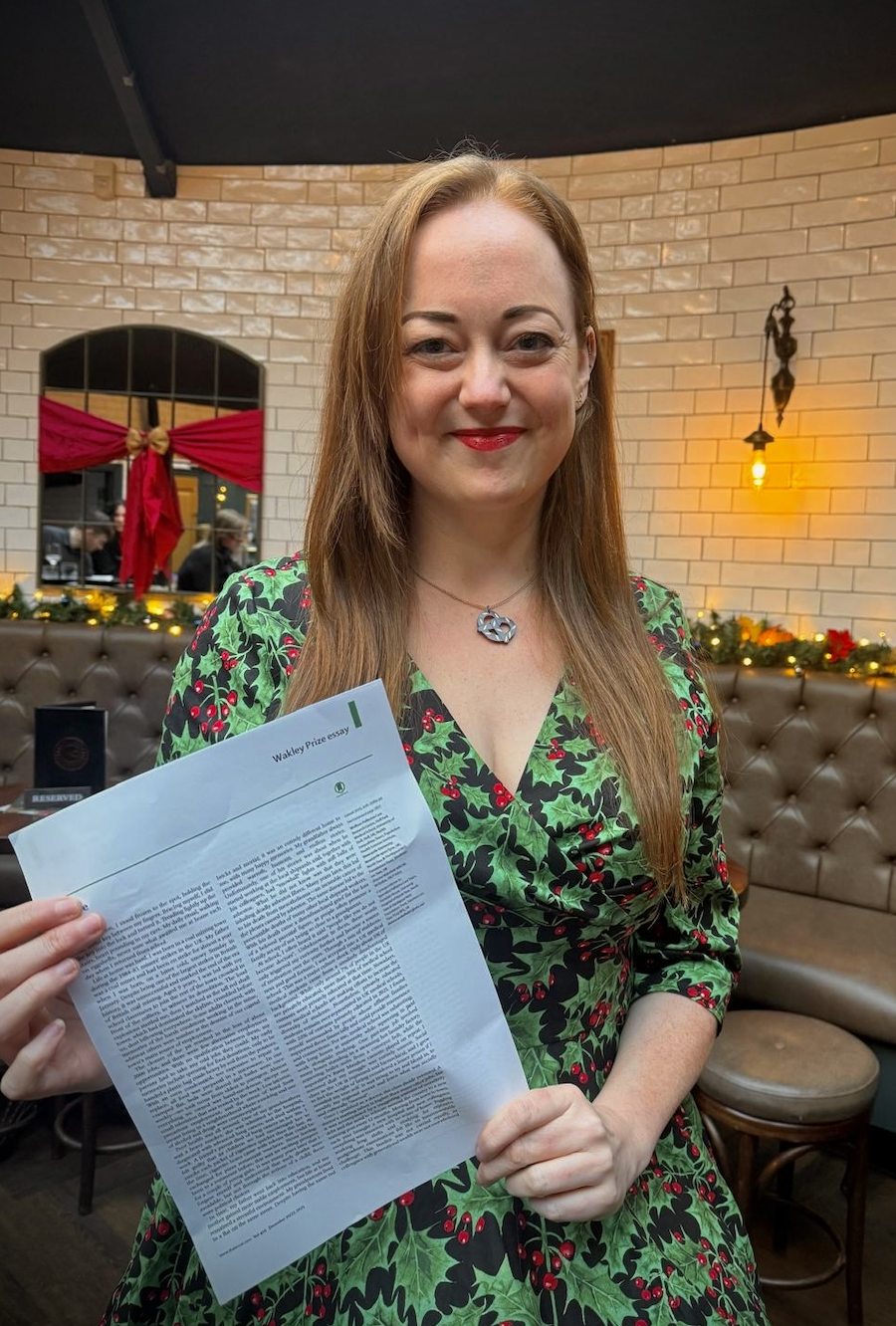
Dr Donna Wakefield, winner of the 2025 Wakley prize
In 2021 I led a critical review exploring the impact of economic deprivation on end-of-life experience. One thing I was particularly struck by was how overlooked this issue is within the current palliative care evidence base. There is also little recognition of the impact of economic resources upon how end-of-life choices are made. The imagined ‘home’ as a warm house with a well stocked fridge and supportive family on hand remains pervasive.
One reason I believe this has happened is because of the socio-economic make up of the professional palliative care workforce. As Miranda Fricker argues:: “An understanding of what it is like to live with poverty… and what the psychological pressures, emotional traumas, and deliberative constraints really are on the ground, cannot be imagined from the outside”.
It was within this context that we formulated a recommendation to increase the socio-economic diversity of the health and social care sector and, in particular, within medicine. I was shocked, but not surprised, to learn that in the United Kingdom, only 4% of doctors come from lower socio-economic backgrounds.
It was therefore fantastic to see our colleague and friend, Dr Donna Wakefield, not only writing about her own experiences of growing up in a coal mining town during the 1984–85 miners’ strikes in the UK where ‘life at home was hard’, but winning the Lancet’s prestigious Wakley prize as a result. Her thoughtful and beautifully written essay discusses the impact of her formative years on her career as a medical doctor. She talks about being told at school that “people like you do not become doctors”. Fortunately for us all this fired up her enthusiasm for pursuing medicine, rather than extinguishing it. By the age of 34 she had been appointed as a consultant in Palliative Medicine and she currently works in the same socio-economically deprived area she grew up in. Her reflections on the impact of her background on her clinical practice make it clear that her experiences growing up help her connect with her patients and understand the choices they make. As she writes:
I am open to conversations that home might not feel safe or comfortable. Family might not be kind or caring. It can be uncomfortable to hear this, but clinicians need to put any discomfort they might feel aside for the benefit of their patients.
These experiences have also shaped her research and it’s been great to write a recent book chapter with her exploring palliative care in hospital with an equity focus.. I firmly believe that we will only properly progress the equity agenda in palliative care if we change who is sitting around the table. Donna telling her story so eloquently, and the value of this being recognised by one of the leading medical journals internationally, is a great step forward.