
“I do get the power of this”. Nurse educators confirm the value of using ‘Vivian’ as a teaching aid
We worked with our talented colleague Dr Tatiana Tavares to create the graphic novel Vivian to highlight themes of gender inequity in end of life caregiving. Dr Lisa Williams led a 3-country evaluation of ‘Vivian’, funded by Universitas-21 to enable us to collaborate with colleagues at the University of Birmingham in the UK and Linnaeus University in Sweden. Our first publication from the project presented findings which confirmed the value of Vivian from a student point of view. Students told us in particular that a graphic novel enabled them to connect more emotionally with the themes explored. Our latest paper, led by Dr Ping Guo from Birmingham, highlighted the value that educators found in using Vivian within nursing curricula.
Our participants discussed the value of using arts-based learning when engaging audiences from diverse backgrounds. As one educator reflected: “I love the thought bubbles versus actually what she said. And, that is, the reality of people do filter or are careful around what they will say or think …” They stressed that Vivian could help students think ‘outside of the box’. As another participant mentioned: “I think this is a really powerful way of communicating quite complex issues, and stopping yourself from over-reaching as an educator and allowing other people to have their own ideas. So anything that encourages me to allow my students to speak is a good option”.
Future research is needed to adapt and refine the graphic novel by considering social and cultural contexts and evaluate how the graphic novel is implemented in nurse education across different settings and countries. We are also working with Tatiana on a number of other graphic novels at the moment, including around the economic costs of end-of-life caregiving, the delivery of fundamental care and the topics of palliative care, and Assisted Dying, in relation to Māori whānau.
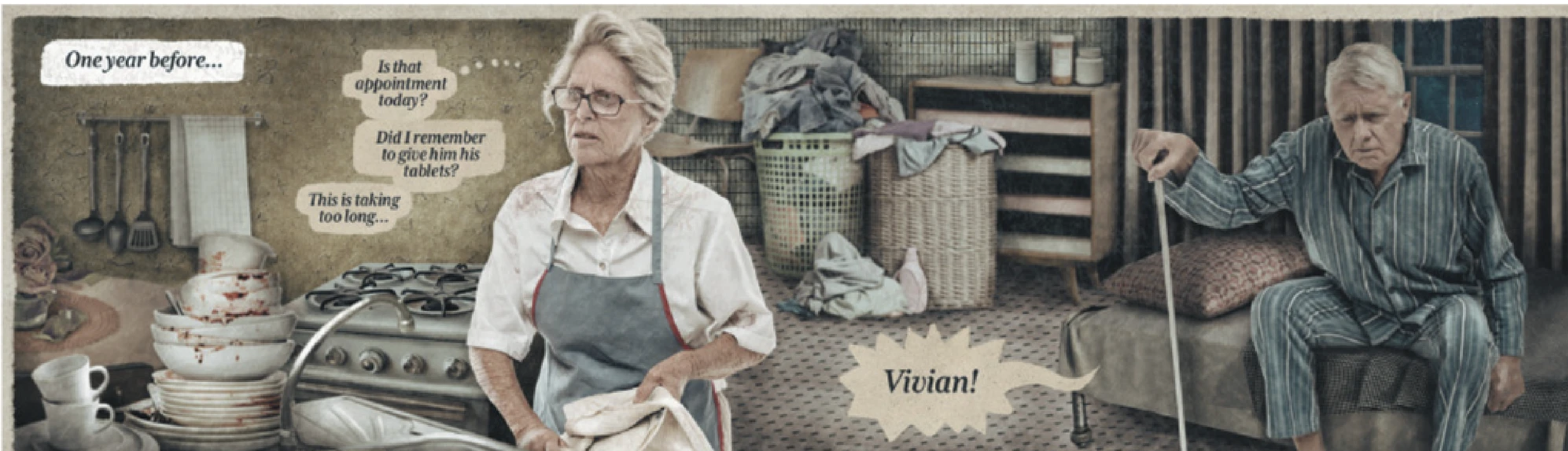
An image from the graphic novel Vivian