
By Stella Black
One of the things I value most about my work in palliative and end-of-life care is the opportunity to share and apply what I learn within my own communities.
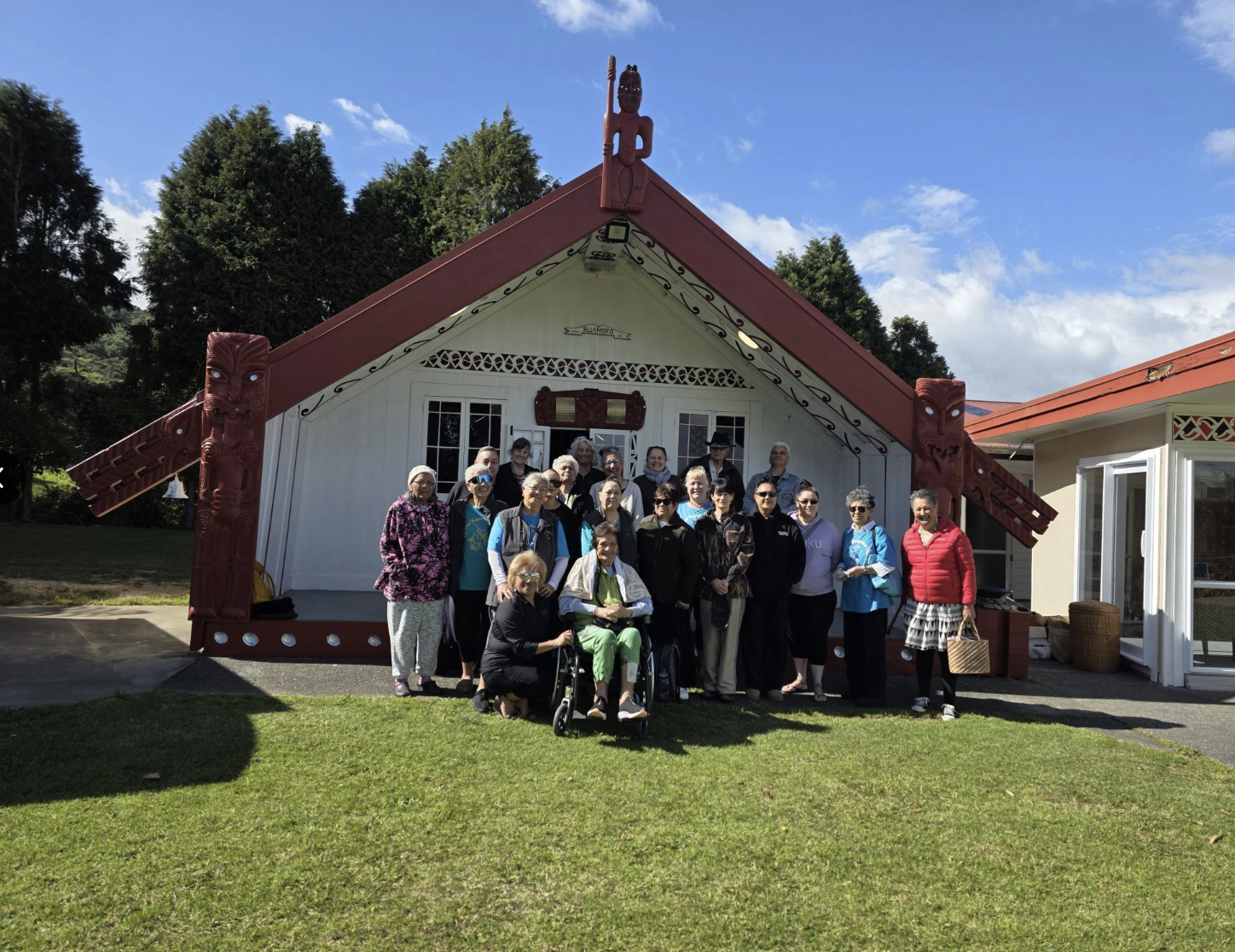
Recently, I spent time with my hapū, Whānau Pani and Ngāti Patumoana, in the Eastern Bay of Plenty as part of Ngā Pou Herenga: End of Life & Funeral Guides Collective. Alongside attending tangihanga, I had the privilege of sharing knowledge, learning from others, and reflecting on the many ways communities support whānau through death, dying and bereavement.
It was a privilege to spend time with kai manaaki tūpāpaku and natural after-death care practitioners Sharday Cable Ranapia and Lanae Cable, whose expertise and commitment to whānau-centred care are inspiring. I also learned from Toby Salmon and Toa about making a puhirere and taupoki as an affordable alternative to a conventional coffin or casket. Beyond reducing cost, the process itself can be deeply healing, creating space for whānau to actively participate in caring for their loved one during a time of grief.
Experiences like these reinforce an important lesson from our research: communities hold significant knowledge, skills and strengths when it comes to caring for people at the end of life. It is an honour to learn from and contribute to these community-led approaches, and to see how research and practice can come together in service of whānau.